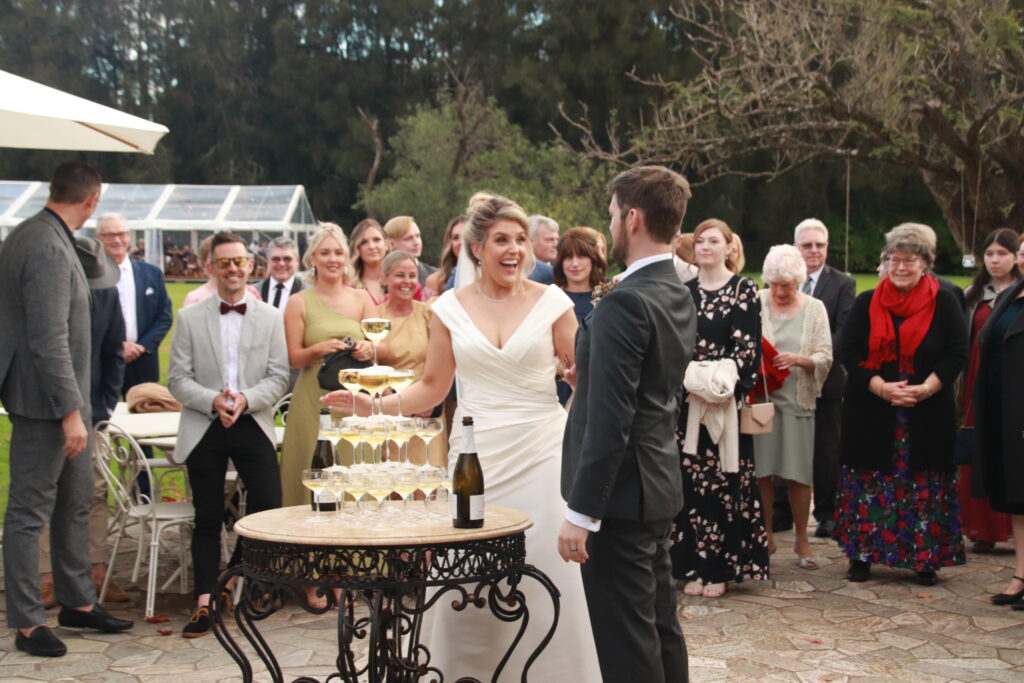
Once couples understand that a wedding is a live event, another idea often needs to be reconsidered: perfection.
Perfection suggests there is one correct version of a wedding — and that anything less is a compromise. In practice, that belief creates hesitation, second-guessing, and pressure that planning doesn’t need.
Experienced professionals rarely plan for perfect. They plan for outcomes.
Why perfection creates friction in planning
Perfection assumes:
- Nothing will change
- Timelines won’t shift
- Everyone will behave predictably
Live events don’t work that way.
When planning is built around perfection, any deviation feels like failure. When planning is built around outcomes, changes are absorbed without stress.
The difference isn’t standards. It’s structure.
More useful goals than “perfect”
Couples who feel confident in their planning often replace “perfect” with one or more of the following:
A calm day
This prioritises realistic timelines, breathing room, and decisions that reduce pressure.
A meaningful experience
This focuses on moments that matter most — and lets less important details stay flexible.
A smooth run of events
This centres sequencing, logistics, and professional coordination over aesthetics alone.
A well-supported team
This ensures clarity around who is responsible for what, and when decisions need to be made.
None of these lower expectations. They simply make success achievable.
Questions that change the planning conversation
Instead of asking “Is this the perfect choice?”, couples may find it more productive to ask:
- Where do we want to feel most relaxed on the day?
- Which moments matter enough to protect with extra time or support?
- What can flex if something runs late?
- Where would we prefer experienced guidance rather than figuring it out ourselves?
The answers to these questions shape the planning journey in very different ways.
What your answers might mean for your planning path
If calm is the priority, planning will likely centre on sequencing, buffers, and fewer transitions.
If meaning leads, decisions will focus on guest experience and emotional moments over trends.
If smooth execution matters most, early attention to timelines, logistics, and professional roles becomes essential.
If support feels important, planning often becomes more efficient — with fewer last-minute decisions and less reactive stress.
None of these paths are better than the others. The key is recognising which one you’re on.
A more reliable measure of success
A more useful question than “Will this be perfect?” is:
“Does this support the experience we actually want?”
When couples answer that honestly, decisions tend to align more easily — and planning starts to feel intentional rather than overwhelming.